
Table of Contents
The Meghan Markle wedding dress marked a defining moment in modern royal history, capturing global attention with its understated elegance and symbolic depth. When Meghan Markle stepped into St. George’s Chapel to marry Prince Harry, her bridal look immediately set itself apart from previous royal weddings. Rather than embracing excessive embellishment, the Meghan Markle wedding dress reflected a modern, confident vision of royalty one rooted in simplicity, inclusivity, and meaning. This single gown reshaped public expectations of royal fashion and continues to influence bridal style years after the ceremony.
A Royal Wedding That Changed Fashion Conversations
The unveiling of the Meghan Markle wedding dress on May 19, 2018, became an instant cultural milestone. Watched by millions around the world, the ceremony symbolized a new era for the British monarchy. Unlike traditional royal gowns known for ornate detailing, the Meghan Markle wedding dress delivered a refined, minimalist aesthetic that felt intentional and contemporary. Fashion critics quickly recognized that the dress was not merely a garment but a statement reflecting changing attitudes toward royal identity and modern womanhood.
The Designer Behind the Iconic Gown
The Meghan Markle wedding dress was designed by Clare Waight Keller, artistic director of Givenchy at the time. As the first woman to hold that role at the fashion house, Keller’s appointment already symbolized progress. Her collaboration with Meghan resulted in a gown that merged French couture craftsmanship with royal sophistication. The Meghan Markle wedding dress showcased Keller’s ability to translate emotion, purpose, and identity into a timeless bridal silhouette without relying on extravagance.
Minimalism as a Powerful Design Choice
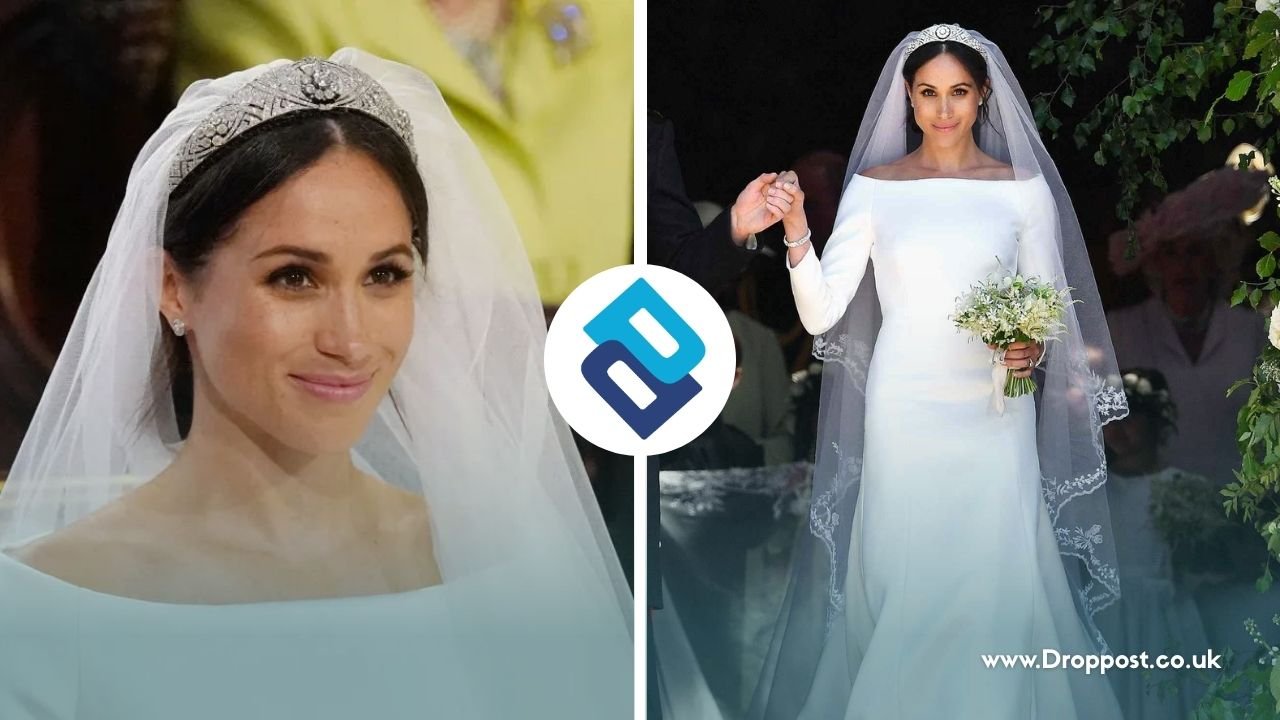
At first glance, the Meghan Markle wedding dress appeared simple, but its construction revealed extraordinary attention to detail. Crafted from double-bonded silk cady, the gown featured a bateau neckline, structured bodice, and three-quarter-length sleeves. This minimalist design allowed the focus to remain on form, fabric, and meaning rather than decoration. The Meghan Markle wedding dress proved that minimalism, when executed with precision, can be just as impactful as ornate royal fashion traditions.
Symbolism Woven Into the Dress
Beyond its silhouette, the Meghan Markle wedding dress carried layers of symbolism. The 16-foot silk tulle veil was hand-embroidered with floral emblems representing each of the 53 Commonwealth nations. This thoughtful inclusion emphasized unity, diversity, and global connection. A small piece of blue fabric sewn into the gown served as Meghan’s “something blue,” adding a personal and traditional touch. These details transformed the Meghan Markle wedding dress into a narrative of heritage and inclusivity.
Redefining Royal Bridal Traditions

Royal wedding gowns have historically embraced grandeur, but the Meghan Markle wedding dress challenged that expectation. While Princess Diana’s dress embodied fairy-tale drama and Kate Middleton’s gown reflected classic British lace traditions, Meghan’s look represented modern restraint. Despite its simplicity, the gown adhered to royal protocol through modest tailoring and timeless structure. The Meghan Markle wedding dress demonstrated that tradition and innovation could coexist harmoniously.
Influence on Global Bridal Fashion
The impact of the Meghan Markle wedding dress extended far beyond royal circles. Brides worldwide began favoring clean lines, bateau necklines, and minimal embellishment. Bridal designers reported a surge in demand for gowns inspired by Meghan’s elegant simplicity. The Meghan Markle wedding dress reshaped modern bridal fashion by redefining luxury not as excess, but as intention, craftsmanship, and authenticity.
Media Reaction and Public Debate
Once revealed, the Meghan Markle wedding dress dominated headlines, fashion editorials, and social media platforms. While many praised its timeless elegance, others debated its simplicity. Regardless of opinion, the gown sparked meaningful conversation about modern femininity and royal expectations. The Meghan Markle wedding dress became one of the most analyzed bridal looks of the decade, ensuring its place in fashion history.
Reflecting Meghan Markle’s Personal Style
The Meghan Markle wedding dress aligned seamlessly with Meghan’s public identity. Known for her advocacy, intelligence, and independence, Meghan selected a gown that reflected substance rather than spectacle. The clean design echoed her preference for purposeful fashion and reinforced her image as a modern royal figure. The Meghan Markle wedding dress was not designed to overwhelm it was designed to represent authenticity.
Comparing Past Royal Wedding Dresses
When viewed alongside other royal wedding gowns, the Meghan Markle wedding dress stands out for its contemporary message. Princess Diana’s gown symbolized romantic fantasy, while Kate Middleton’s reflected regal tradition. Meghan’s gown told a story of global inclusivity and modern values. Each dress represents its era, but the Meghan Markle wedding dress uniquely captured cultural transition within the monarchy.
The Role of the Reception Dress
Although Meghan wore a second gown for the evening reception, the Meghan Markle wedding dress worn during the ceremony remained the defining fashion moment. The simplicity and symbolism of the main gown left a lasting impression that overshadowed all other attire worn that day. Its presence reinforced the importance of ceremonial fashion in shaping historical narratives.
Long-Term Legacy in Fashion History
Years after the wedding, the Meghan Markle wedding dress continues to inspire designers, brides, and fashion historians. It is frequently referenced in bridal retrospectives and museum exhibitions exploring modern fashion milestones. The gown’s legacy lies in its ability to remain relevant, proving that thoughtful design transcends trends.
Why the Dress Still Resonates Today
The Meghan Markle wedding dress remains influential because it reflects values that continue to matter diversity, purpose, and self-expression. In a world where fashion often leans toward extravagance, Meghan’s bridal choice serves as a reminder that elegance can be quiet yet powerful. The gown’s lasting appeal confirms its importance in both royal and fashion history.
Conclusion: A Defining Moment in Royal Style
The Meghan Markle wedding dress was more than a bridal gown it was a cultural turning point. Through minimalist design, symbolic craftsmanship, and modern vision, it redefined royal fashion for a new generation. Its influence continues to shape bridal trends and public perception of royal style. The Meghan Markle wedding dress stands as a timeless symbol of progress, identity, and refined elegance.
FAQs
Who designed the Meghan Markle wedding dress?
The gown was designed by Clare Waight Keller for the luxury fashion house Givenchy.
Why was the Meghan Markle wedding dress considered modern?
Its minimalist design, symbolic veil, and departure from ornate royal traditions made it distinctly modern.
What fabric was used for the gown?
The dress was crafted from double-bonded silk cady, giving it a clean and structured appearance.
What was the meaning behind the veil?
The veil featured embroidered flowers representing all 53 Commonwealth nations.
How did the dress influence bridal trends?
The Meghan Markle wedding dress inspired a global shift toward minimalist, elegant bridal fashion.
Where did Meghan Markle wear the dress?
She wore the gown at St. George’s Chapel during her wedding to Prince Harry.
Stay connected with droppost.co.uk through our [royal fashion updates].