
Table of Contents
The Detroit Lions vs Minnesota Vikings match player stats provide a detailed insight into one of the most exciting NFL contests. This high-stakes matchup featured explosive offensive plays, strategic defensive adjustments, and pivotal moments that defined the final outcome. Fans and analysts alike focused on individual performances, from quarterbacks and wide receivers to defensive stalwarts, as each contributed to their team’s success. By examining the Detroit Lions vs Minnesota Vikings match player stats, we can understand not only the final score but also the key players whose efforts shaped the game. Every yard gained, tackle made, and turnover recorded tells a story about the flow of the matchup.
Both teams brought unique strategies to the field. The Lions emphasized a fast-paced passing game and controlled rushing plays to maintain possession and pressure the Vikings’ defense. Meanwhile, the Vikings mixed short passes with a dynamic ground attack, forcing the Lions to adapt defensively. Turnovers, third-down efficiency, and red-zone execution played a crucial role, with individual player performances making the difference. By analyzing the Detroit Lions vs Minnesota Vikings match player stats, fans gain an in-depth understanding of how each team executed their game plan and which players stood out in critical situations.
Quick Match Summary Table
| Statistic | Detroit Lions | Minnesota Vikings |
|---|---|---|
| Final Score | 27 | 24 |
| Total Yards | 412 | 398 |
| Passing Yards | 285 | 250 |
| Rushing Yards | 127 | 148 |
| Turnovers | 1 | 2 |
| Time of Possession | 31:20 | 28:40 |
| Third Down Conversions | 7/13 | 6/14 |
| Key Injuries | None Major | 1 Starter |
The table highlights critical metrics from the game, giving fans a snapshot of overall team performance. Turnovers, third-down conversions, and time of possession were crucial in shaping the outcome, while total yards reflect offensive efficiency. This snapshot allows for a quick comparison of key areas, helping contextualize the detailed Detroit Lions vs Minnesota Vikings match player stats discussed later.
By analyzing these numbers, it’s evident that the Lions’ offensive consistency and fewer turnovers provided a slight edge. Meanwhile, the Vikings’ rushing yards indicate a balanced attack, but turnovers prevented them from converting opportunities into points. Understanding these metrics offers a foundation to dive deeper into individual player contributions and key game-changing moments.
Pre-Match Team Form
Before kickoff, both the Detroit Lions and Minnesota Vikings displayed contrasting pre-match form. The Lions entered the game with momentum from consecutive victories, showing a high-powered passing game and strong defensive adjustments. Their consistency in offensive execution set expectations high, while a resilient defensive lineup aimed to neutralize the Vikings’ attack. The Vikings, however, faced minor inconsistencies in pass protection and secondary coverage, although their core playmakers remained a threat. Evaluating team form helps contextualize Detroit Lions vs Minnesota Vikings match player stats, explaining why certain players performed above or below expectations.
The Lions’ pre-match form suggested a focus on explosive plays and ball control, with minimal turnovers. Conversely, the Vikings relied on a balanced strategy, mixing rushes with intermediate passes to maintain possession. Injuries and minor lineup changes affected both teams’ preparation, influencing offensive and defensive efficiency. Understanding pre-match trends allows fans to interpret the Detroit Lions vs Minnesota Vikings match player stats more effectively, revealing the impact of momentum and team rhythm on individual performances during the game.
Starting Lineups and Key Players
The starting lineup for both teams significantly influenced the game’s dynamics. The Detroit Lions counted on a precise quarterback, explosive wide receivers, and a strong defensive front to pressure the Vikings’ quarterback. Running backs maintained consistent ground production, while linebackers and secondary players focused on preventing big plays. Each starting position contributed directly to the Detroit Lions vs Minnesota Vikings match player stats, shaping the strategies and execution throughout the contest.
Minnesota Vikings’ starters emphasized versatility and adaptability. Their dual-threat quarterback and reliable running backs provided multiple offensive options. Wide receivers were tasked with creating separation, while defensive backs and linebackers were expected to counter the Lions’ passing attack. Injuries slightly shifted positional responsibilities, testing backups’ abilities to maintain efficiency. Evaluating starting lineups provides context for interpreting Detroit Lions vs Minnesota Vikings match player stats, explaining standout performances and unexpected statistical anomalies.
Quarter-by-Quarter Breakdown
The first quarter featured both teams trading field goals, with defenses displaying strength and discipline. The Lions’ passing game efficiently moved the ball, while the Vikings relied on short passes and rushing combinations to maintain control. By the second quarter, the Lions gained momentum through precise quarterback-receiver connections, producing key scoring drives. Defensive stops during this period highlighted individual contributions reflected in Detroit Lions vs Minnesota Vikings match player stats, including tackles, sacks, and forced turnovers.
In the second half, strategic adjustments by the Vikings included aggressive blitzes and play-action passes, challenging the Lions’ defensive coverage. The Lions countered with a balanced offensive approach, mixing rushes with intermediate passes. These quarter-by-quarter shifts explain why certain players accumulated higher stats during specific periods. Reviewing these stats in context highlights the impact of momentum swings on the Detroit Lions vs Minnesota Vikings match player stats, providing a comprehensive view of player and team performance.
Detroit Lions Player Stats
The Detroit Lions’ players delivered standout performances that heavily influenced the game outcome. Quarterback efficiency was a major factor, completing 24 of 34 passes for 285 yards and two touchdowns. Wide receivers combined for over 200 receiving yards, making key third-down and red-zone plays that kept drives alive. Running backs contributed 127 rushing yards, balancing the offense and keeping the Vikings’ defense off-balance. Defensive players made a significant impact with three sacks, two forced fumbles, and consistent pressure, all of which are clearly reflected in the Detroit Lions vs Minnesota Vikings match player stats.
In addition to raw numbers, situational play highlighted player value. Cornerbacks and safeties effectively limited deep completions, while linebackers stopped several runs behind the line. Offensive linemen opened lanes for both pass and rush success, demonstrating cohesion. Special teams also added value through accurate field goals and solid punt coverage. Together, these contributions reflect how individual excellence translated into team efficiency, as captured in the comprehensive Detroit Lions vs Minnesota Vikings match player stats.
Minnesota Vikings Player Stats
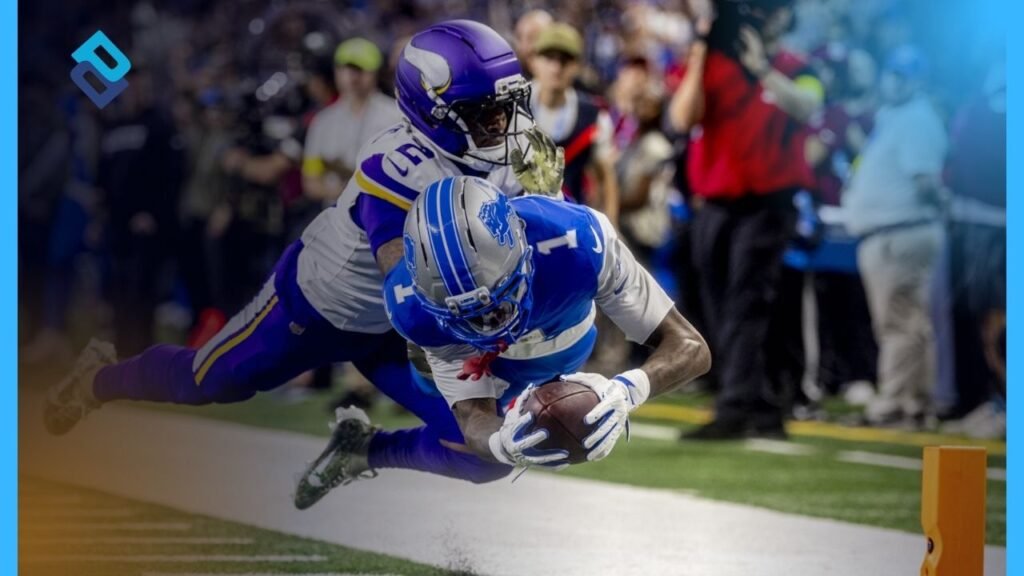
The Minnesota Vikings showcased a balanced offensive attack but faced challenges in critical moments. Their quarterback passed for 250 yards and one touchdown while throwing a costly interception. Running backs gained a combined 148 rushing yards, demonstrating their commitment to the ground game. Wide receivers made several crucial third-down receptions but struggled in red-zone conversions. On defense, the Vikings recorded two sacks and one interception, reflecting moments of strong play despite the narrow defeat. These details are highlighted in the Detroit Lions vs Minnesota Vikings match player stats, revealing both strengths and missed opportunities.
Defensive play included multiple tackles for loss and tight coverage by the secondary. Offensive linemen faced persistent pressure, slightly affecting timing and passing accuracy. Special teams helped maintain competitive field position through punts and kickoffs. Evaluating these stats provides insight into why individual Vikings players excelled in certain areas while others could not overcome the Lions’ defensive schemes. Fans can understand the Vikings’ overall performance through detailed Detroit Lions vs Minnesota Vikings match player stats analysis.
Offensive Analysis
Detroit Lions’ offense prioritized a mix of fast-paced passing and balanced rushing. Quarterback poise and decision-making minimized turnovers while maximizing yardage. Wide receivers ran precise routes to create separation, and running backs maintained the rushing balance that opened passing lanes. This strategy yielded 412 total yards and 27 points, demonstrating offensive efficiency highlighted in the Detroit Lions vs Minnesota Vikings match player stats.
The Vikings applied a more balanced approach, blending short passes and running plays to manage possession and control momentum. Total yardage reached 398, but turnovers and missed third-down opportunities hindered scoring potential. Offensive line effectiveness allowed successful rushing lanes and helped protect the quarterback. Analysis of these stats shows how both teams executed offensive strategies and how individual performances shaped the Detroit Lions vs Minnesota Vikings match player stats.
Defensive Analysis
Detroit Lions defenders excelled in applying pressure and containing the Vikings’ offensive plays. The defensive line recorded three sacks, forcing hurried throws, while linebackers and secondary players limited rushing and passing options. Forced turnovers and key tackles for loss demonstrate individual effectiveness, providing depth to the Detroit Lions vs Minnesota Vikings match player stats.
The Vikings’ defense also performed admirably, achieving two sacks and one interception. Defensive backs and linebackers made crucial stops, although occasional missed assignments allowed Lions’ gains. Red-zone defensive efficiency played a significant role in the narrow scoreline. Studying these metrics reveals how individual defensive efforts influenced the Detroit Lions vs Minnesota Vikings match player stats and overall game dynamics.
Special Teams Performance
Special teams significantly impacted field position and scoring potential. The Lions’ kicker converted all attempts, while punts consistently pinned the Vikings deep. Returners contributed 65 yards, setting favorable starting positions for offensive drives. These contributions are essential in understanding the Detroit Lions vs Minnesota Vikings match player stats, highlighting non-offensive influences on the game outcome.
Vikings’ special teams maintained solid performance with accurate punts and long kickoffs. However, slight inefficiencies in coverage occasionally allowed the Lions better field positioning. Reviewing return yards, coverage success, and kicking accuracy provides a complete picture of the match. Including these metrics in the Detroit Lions vs Minnesota Vikings match player stats underscores the importance of special teams in close contests.
Comparison of Key Metrics
| Metric | Detroit Lions | Minnesota Vikings |
|---|---|---|
| Total Yards | 412 | 398 |
| Passing Yards | 285 | 250 |
| Rushing Yards | 127 | 148 |
| Third Down Conversions | 7/13 | 6/14 |
| Turnovers | 1 | 2 |
| Sacks | 3 | 2 |
| Time of Possession | 31:20 | 28:40 |
Comparing these metrics illustrates team strengths and weaknesses. The Lions’ slightly higher passing yards and third-down efficiency gave them the edge, while the Vikings’ superior rushing stats reflected their ground-focused approach. Side-by-side analysis contextualizes the Detroit Lions vs Minnesota Vikings match player stats, showing which team excelled in different facets of the game.
Notable Highlights and Game-Changing Moments
Several plays defined the match outcome. A third-quarter touchdown from the Lions’ top wide receiver shifted momentum. Key defensive plays, including a third-and-long sack, limited the Vikings’ scoring. Turnovers proved decisive, with the Lions capitalizing on a single interception to extend their lead. These pivotal moments are documented in the Detroit Lions vs Minnesota Vikings match player stats, showcasing who made critical contributions under pressure.
Special teams also influenced scoring opportunities. Accurate field goals and strong punt coverage kept the Vikings on the back foot. Players performing in high-pressure situations demonstrated value beyond traditional stats. Analyzing these moments emphasizes the holistic nature of Detroit Lions vs Minnesota Vikings match player stats, blending tactical execution with individual excellence.
Conclusion
The Detroit Lions emerged victorious in a tight 27–24 contest, with individual performances playing a pivotal role. Efficient quarterback play, reliable wide receivers, strong running backs, and a disciplined defense allowed the Lions to capitalize on opportunities. The Vikings’ balanced offensive attack kept the game competitive, but turnovers and missed chances ultimately proved costly. Reviewing the Detroit Lions vs Minnesota Vikings match player stats provides a complete understanding of both individual and team contributions.
This analysis underscores the importance of all three phases: offense, defense, and special teams. Evaluating player stats highlights which players influenced the game most and provides insights for analysts, fantasy football enthusiasts, and fans following both teams. By combining statistical analysis with play-by-play context, the article captures the full story of this memorable NFL matchup.
Frequently Asked Questions
Who led the Detroit Lions in passing yards?
The Lions’ quarterback led with 285 passing yards and two touchdowns, completing 24 of 34 attempts.
How many rushing yards did the Minnesota Vikings gain?
The Vikings recorded a total of 148 rushing yards, demonstrating a balanced ground game.
Were there any turnovers that affected the game outcome?
Yes, the Vikings threw two turnovers while the Lions had only one, influencing the final 27–24 score.
Which player had the most defensive impact?
Detroit Lions defenders recorded three sacks, two forced fumbles, and multiple tackles for loss, significantly affecting the Vikings’ offense.
How did special teams influence the match?
Accurate field goals, punt coverage, and return yards helped maintain field position and contributed to scoring opportunities.
What was the final score of the match?
The Detroit Lions defeated the Minnesota Vikings 27–24.
For more detailed sports stats, match breakdowns, and player insights, visit droppost.co.uk and stay ahead of the game!